Certified Mobile Crane Rental Abu Dhabi: 2027 Safety Guide
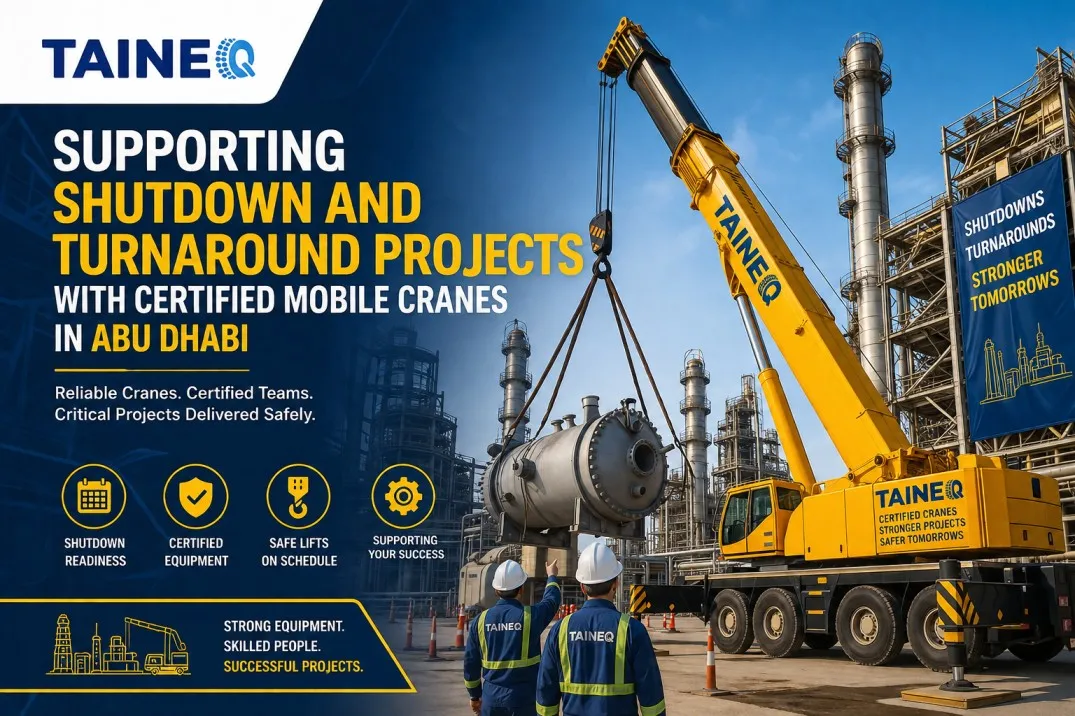
Certified mobile crane rental Abu Dhabi gives industrial project teams access to inspected cranes for planned lifting work. Before mobilization, confirm the crane documentation, configuration and site conditions match the lift requirements.
For refinery shutdowns, petrochemical projects and infrastructure work, crane selection starts with the load and the lift geometry, not capacity alone. The working radius, boom configuration and ground conditions all affect whether a crane can perform the lift within its manufacturer load chart.
How to Select a Mobile Crane for the Lift
Start with the approved lift information and the work area. Lifting engineers review equipment weights, the centre of gravity, rigging arrangements and access routes, then check the planned crane configuration against the manufacturer’s load chart.
Use these details to define the requirement:
- Load: Include the load and its rigging gear and lifting accessories.
- Lift geometry: Confirm the working radius, lifting height, boom length and boom angle.
- Crane setup: Specify the required counterweight and outrigger position.
- Ground and access: Check ground bearing pressure, underground services and the route to the work area.
- Work area: Review swing clearance and applicable wind speed limits.
For example, a crane’s capacity at a short radius does not establish its capacity at a longer radius. The lifting team must check the load chart for the actual boom and outrigger setup planned for the site. If the site cannot accommodate that configuration, the crane choice or lift arrangement needs to be reviewed before mobilization.
Crane Documentation and Safety Checks
A crane’s nameplate capacity describes only a particular operating condition. Capacity changes with the working radius, boom extension, counterweight configuration and outrigger position. Confirm the planned setup against the manufacturer’s load chart rather than relying on the crane’s maximum rated capacity.
Before accepting a rental crane, check the documentation and equipment provisions relevant to the project:
- Third-party inspection certification and documented service history.
- Operator competency verification.
- Load Moment Indicator calibration records.
- Anti Two Block and overload protection systems.
- Preventive maintenance records.
Project requirements may specify additional approvals or inspection evidence. The lifting supervisor and site HSE team should confirm those requirements before the crane is assigned to the lift. During the operation, the operator and lifting team must use the approved configuration and follow the project lifting procedure.
Where Certified Mobile Cranes Are Used
Industrial contractors use mobile cranes for installation and maintenance work where the load, work area or operating risk calls for an engineered lift. Typical applications include:
- Refinery shutdown maintenance and equipment replacement.
- Petrochemical plant expansion and process equipment installation.
- Pressure vessel and heat exchanger installation.
- Pipe rack and structural steel erection.
- Generator and modular skid installation.
- Storage tank construction and power plant maintenance.
- Bridge construction and marine terminal development.
- Module handling at fabrication yards.
These jobs call for coordination between the lifting supervisor, rigging team, signalmen, site engineers and HSE personnel. For a shutdown, for instance, the crane position and access route need to fit the planned equipment replacement as well as the surrounding work area.
Crane Rental Across EPC Project Stages
Engineering, procurement and construction contractors may need cranes at different points in a project. The lift requirement changes with the work: structural steel erection calls for a different setup from equipment replacement or module loading.
| Project activity | Example lifting work | Selection point to confirm |
|---|---|---|
| Steel structure erection | Column and beam installation | Working radius and boom configuration |
| Pipe rack construction | Pipe spool lifting and placement | Access, clearance and planned crane position |
| Mechanical installation | Pumps, compressors and vessels | Load details, rigging and lift height |
| Shutdown maintenance | Equipment replacement | Work-area restrictions and lift sequence |
| Fabrication yard work | Module loading and unloading | Ground conditions and access route |
The table is a starting point, not a substitute for lift planning. The lift team still needs to review the load information and site conditions for each operation.
What to Include in a Crane Rental Request
Send the rental provider enough information to assess the crane requirement before mobilization. A request based only on the load weight can leave key selection questions unresolved. Include the approved lift information where available, then clarify site constraints with the project lifting team.
- Provide the load weight, dimensions and centre of gravity information.
- State the required lifting height and working radius.
- Describe the planned rigging arrangement and lifting accessories.
- Share the required crane position, outrigger setup and ground information.
- Identify access restrictions, underground services and nearby operating areas.
- Confirm the project’s inspection, operator and lifting-plan requirements.
Once the configuration is reviewed, the project team can check whether it fits the load chart and site setup. If a key detail is missing, resolve it before the crane is scheduled for the lift.
Why Contractors Rent Certified Cranes
Contractors may rent rather than own cranes when equipment needs vary across project locations or work stages. Rental can provide access to equipment without adding a permanent fleet asset. A particular rental’s suitability still depends on the crane’s condition, documentation, and ability to meet the lift plan.
For shutdown work, coordinate crane availability with the approved lifting sequence. A delay in equipment mobilization can affect the work schedule, while a mismatch between the crane configuration and site conditions can require the lift to be replanned. Confirming requirements and documentation early helps the project team address issues before work begins.
Conclusion
Choosing certified mobile crane rental Abu Dhabi for industrial work means matching inspected equipment to the planned lift and the conditions on site. Review the load chart for the intended configuration, confirm the supporting documents and resolve access or ground concerns before mobilization. This process supports lifting work across shutdowns, EPC projects, industrial maintenance and infrastructure construction.
FAQs
1. What is a certified mobile crane?
It is a mobile crane supported by inspection and certification records for lifting work. The project should also verify that the equipment, operator and planned configuration meet its requirements.
2. Which projects use certified mobile cranes?
Common applications include refinery shutdowns, oil and gas facilities, petrochemical projects, structural steel erection, equipment installation and infrastructure work.
3. Why is lift planning necessary?
Lift planning establishes the crane configuration and checks the load, working radius, lifting height, rigging arrangement and site conditions before the operation.
4. What affects mobile crane selection?
Load weight is one factor. The working radius, boom configuration, ground conditions, access and manufacturer load chart also affect selection.
5. What should I check before renting a crane?
Confirm the crane’s inspection and maintenance documentation, operator competency evidence, safety system records and fit with the planned lift and site requirements.