Maximizing Fuel Efficiency for Heavy Road Machinery on Long-Term Leases
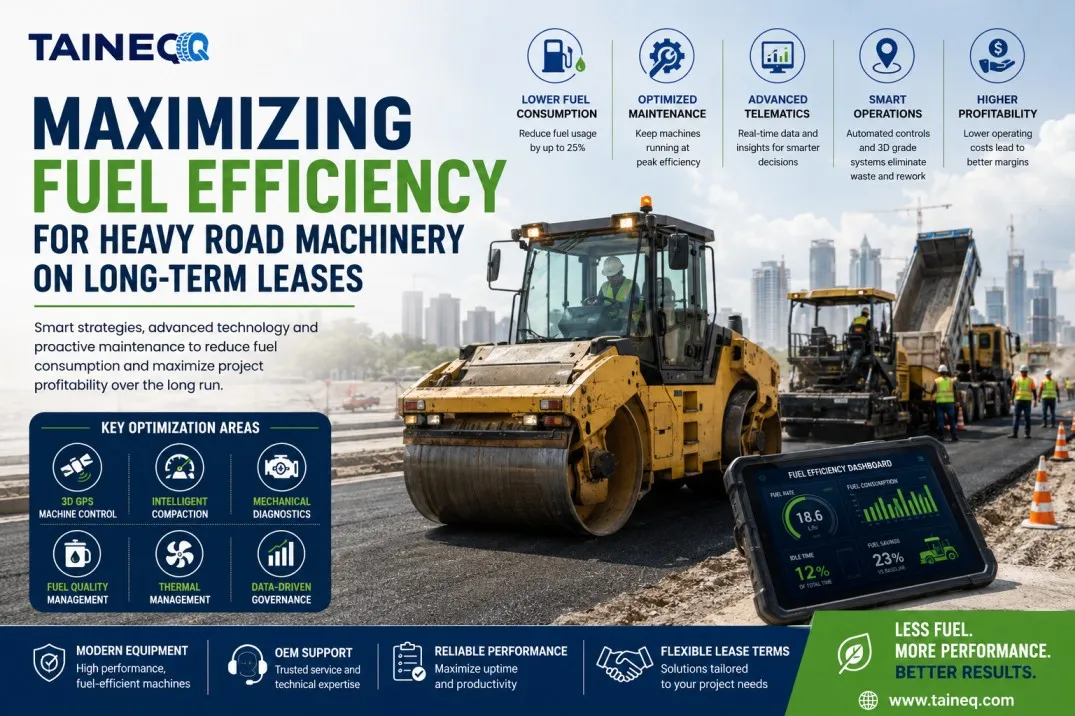
Fuel represents 30% to 40% of the total operating expenditure across long-term infrastructure and highway development projects. When operating heavy equipment under multi-year contracts, inefficient fuel burn directly erodes project profitability. Securing a strategic road construction equipment rental agreement allows infrastructure contractors to deploy high-tier machinery without massive upfront capital expenditure. However, operating leased heavy machinery over 3 to 5 years (or 5,000+ engine hours) introduces distinct operational challenges that generic fleet management advice fails to address.
Unlike owned equipment where depreciation is amortized internally, long-term leased assets carry strict residual value clauses, OEM warranty compliance metrics, and rigid maintenance schedules. Standard fleet advice—such as ‘turn off idling engines’ or ‘maintain correct tire pressure’—barely scratches the surface of true asset optimization.
To unlock 15% to 25% in diesel fuel reductions, fleet directors must integrate commercial contract structuring, 3D machine automation, high-pressure hydraulic diagnostics, and site-level fuel quality controls. Partnering with specialized providers like Taineq ensures contractors gain access to modern, high-efficiency equipment backed by advanced telematics and operational support.
| KEY TAKEAWAY Executive Summary Insight: Achieving peak fuel efficiency on long-term leases requires treating the machine not merely as an isolated mechanical unit, but as a integrated commercial and technological system combining OEM guarantees, CAN-bus data monitoring, and precision grade control. |
Commercial & Contractual Strategy (Lease Architecture)
True fuel optimization begins long before a motor grader or asphalt paver touches job-site soil. It originates during lease contract negotiation.
Capitalizing on OEM Fuel Consumption Guarantees
Major original equipment manufacturers (OEMs) offer contractual fuel guarantees. These programs establish baseline burn rates (liters per hour) tailored to specific duty cycles. If a machine operating within standard parameters exceeds the OEM baseline over a 12-month period, the OEM provides financial credits to offset the excess fuel spend.
- Baseline Setting: Establishing model-specific baseline targets (e.g., 18–22 L/hr for a 200 hp motor grader vs. 28–34 L/hr for a 45-ton crawler excavator).
- Data Validation: Ensuring the lease contract explicitly links machine telematics fuel data to the manufacturer’s reimbursement workflow.
- Rental Partner Integration: Working with a top-tier road construction equipment rental partner like Taineq guarantees that equipment comes pre-certified for OEM performance guarantee programs.
Aligning Maintenance Scope (Net vs. Full-Service Leases)
The structure of a long-term lease dictates who bears the financial burden of component degradation:
- Triple Net Leases (NNN): The lessee handles all routine service, fluid changes, and filter replacements. On long leases, contractors often skip mid-life hydraulic pump tune-ups or injector calibrations to save short-term maintenance cash, inadvertently increasing fuel burn by 10% to 15%.
- Full-Service Leases (FSL): The leasing partner handles scheduled maintenance. Contracts must mandate mid-lease fuel injector testing, hydraulic valve calibration, and radiator cleaning cycles to maintain peak combustion and hydraulic efficiency.
Leveraging Bundled Factory Telematics
Modern leased machinery comes pre-equipped with factory telematics software (such as CAT VisionLink, Komatsu Komtrax, or John Deere WorkSight). Rather than incurring secondary hardware costs with third-party tracking units, fleet managers should extract direct Controller Area Network (CAN-bus) data. This provides raw data on engine load factors, fuel rate curves, and hydraulic pressure spikes in real time.
Machine-Specific Roadway Technology & Automation
While operator habits influence fuel burn, automated machine control eliminates non-productive machine hours entirely. When procuring a road construction equipment rental fleet, verifying compatibility with 3D grade control systems yields the highest return on investment.
3D GPS Machine Control & Automated Grading
Integrating 3D GPS grade control (e.g., Leica, Topcon, or Trimble) onto motor graders, dozers, and excavators fundamentally transforms earthmoving efficiency. Automated blade control adjusts hydraulic lift and tilt directly against digital terrain models (DTM) with millimeter precision.
- Elimination of Rework: 3D grade control eliminates over-excavation and under-excavation, reducing total required grading passes by 30% to 50%.
- Direct Diesel Savings: A 220 hp motor grader completing a 10 km highway section in 3 passes instead of 5 saves approximately 420 liters of diesel fuel per kilometer.
- Engine Load Optimization: Grade control maintains optimal engine load, preventing operator-induced engine lugging and excessive hydraulic pressure relief valve blowing.
Intelligent Compaction (IC) for Rollers
Over-compacting soil or asphalt waste significant fuel and damages pavement aggregates. Intelligent Compaction (IC) systems utilize accelerometer-based drum instrumentation, integrated GPS positioning, and infrared temperature sensors.
- Stiffness Monitoring: The system calculates real-time stiffness metrics (EVIB or MN/m²). Once target density is achieved, the operator immediately halts vibration and moves to the next section, cutting unnecessary roller passes by 20%.
- Thermal Mapping: On asphalt rollers, integrated thermal sensors map pavement surface temperatures. This prevents rolling cold asphalt, which demands high vibration amplitude and burns maximum fuel for minimal compaction gain.
Milling Depth & Load Control for Cold Planers
Cold milling planers represent one of the most fuel-intensive assets in road rehabilitation. Utilizing automated milling depth sensors coupled with automatic engine load control prevents cutter drum stalling. The system automatically governs propel speed based on engine load torque, keeping the diesel engine operating within its sweet spot (1,600–1,800 RPM).
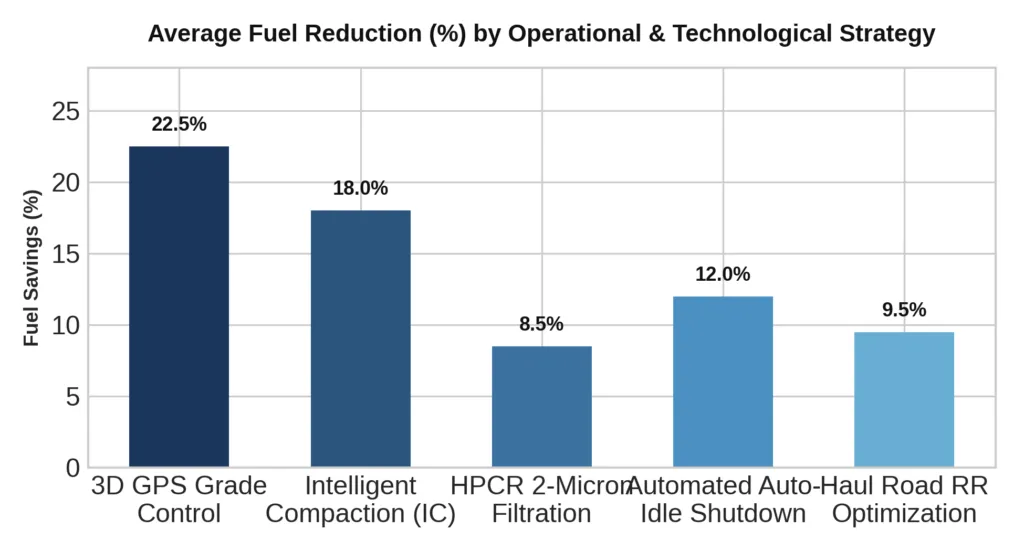
Figure 1: Operational and technological strategies ranked by average percentage of diesel fuel reduction.
Mechanical Diagnostics & Long-Term Component Aging
Over a 3- to 5-year lease duration, machinery performance degrades silently due to mechanical wear. Contractors utilizing long-term road construction equipment rental must execute proactive diagnostics to prevent severe efficiency decay.
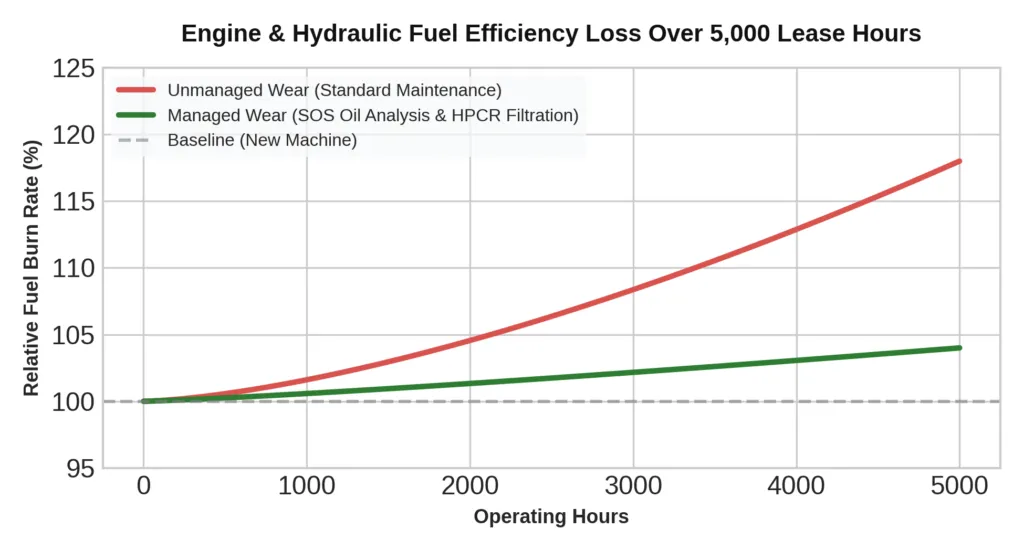
Figure 2: Compounding fuel efficiency loss over a 5,000-hour lease term comparing unmanaged vs managed component wear.
Fluid Health & Scheduled Oil Sampling (S.O.S.)
Routine fluid sampling is the single most effective tool for detecting internal efficiency losses. Hydraulic pumps operating at 5,000 PSI suffer from internal micro-abrasion over time. This creates ‘hydraulic slip’—where pressurized fluid bypasses internal piston seals.
- Hydraulic Slip Impact: As hydraulic oil degrades and shearing occurs, pumps must rotate faster to deliver required flow rates, forcing the engine to burn 5% to 8% more fuel per cycle.
- Diagnostic Cadence: Conducting S.O.S. laboratory fluid analysis every 250 operating hours identifies elemental wear metals (copper, iron, chrome) and fuel dilution early.
- Injector Protection: Detecting fuel dilution (>2%) early prevents cylinder washboard wear and protects high-pressure fuel injectors.
Thermal Management in Continuous-Duty Cycles
Road equipment operating in high ambient temperatures (such as asphalt pavers and planers) frequently suffers from thermal throttling. Stacked cooling packages (radiator, hydraulic oil cooler, charge air cooler) accumulate road dust, bitumen overspray, and airborne debris.
When cooling efficiency drops, engine management systems automatically engage high-speed variable cooling fans. A fully engaged hydraulically-driven fan can consume up to 30 to 45 horsepower directly from the engine flywheel, increasing fuel consumption by 8% to 12%. Regularly reversing hydraulic cooling fans and pressure-washing radiator cores eliminates this parasitic power loss.
Tier 4 Final / Stage V Regeneration Management
Modern diesel engines utilize Diesel Particulate Filters (DPF) to trap soot. Excessive low-load idling prevents exhaust temperatures from reaching passive regeneration levels (above 300°C).
When DPF soot loading reaches critical thresholds, the engine initiates Active Regeneration—injecting raw diesel fuel directly into the exhaust stream to heat the DPF to 600°C. A single active regeneration cycle burns 4 to 8 liters of diesel purely for filter cleaning. Matching machine duty cycles to maintain high exhaust heat eliminates active regeneration frequency.
Job-Site Logistics & On-Site Fuel Quality
A well-maintained machine operating on high-quality road construction equipment rental terms can still suffer severe fuel losses if job-site logistics and fuel handling are substandard.
Bulk Fuel Quality & HPCR Protection
Modern High-Pressure Common Rail (HPCR) fuel systems operate at extreme pressures exceeding 30,000 PSI (2,000+ bar). Fuel injector nozzle orifices are laser-drilled to microscopic diameters. Contaminated job-site fuel instantly ruins combustion efficiency.
- ISO 4406 Cleanliness Standards: Fuel dispensed from mobile site bowsers must meet ISO 4406 cleanliness standards (target: 18/16/13). Microscopic particulate contamination distorts injector spray patterns, resulting in incomplete fuel combustion, excess black smoke, and a 5% to 10% loss in fuel economy.
- Secondary On-Site Filtration: Installing secondary 2-micron water-separating filtration systems on site storage tanks prevents water emulsification, protecting expensive fuel pumps from premature failure.
Haul Road Rolling Resistance & Site Topography
Rolling Resistance (RR) is the physical force opposing motion over a surface. Unmaintained, muddy, or rutted site haul roads dramatically increase fuel burn across earthmoving haulers and highway trucks.
| TECHNICAL FORMULA Rule of Thumb: Every 10 kg per metric ton reduction in haul road rolling resistance reduces vehicle fuel consumption by approximately 1%. Utilizing a dedicated motor grader from a high-performance road construction equipment rental lineup to maintain smooth haul roads yields immediate fleet-wide fuel savings. |
Data-Driven Governance & Operational KPIs
Transitioning from passive monitoring to active data governance ensures long-term fuel discipline across all lease operators.
Key Performance Indicators (KPIs) to Track
Standard ‘liters per hour’ metrics can be misleading because a machine working in heavy rock cuts naturally burns more fuel than one sitting idle. Fleet managers operating road construction equipment rental assets should evaluate advanced production metrics:
- Payload / Fuel Ratio: Liters burned per ton of material moved, or liters per square meter of road base graded. This correlates fuel spend directly to project revenue.
- Idle Severity Index: Categorizing idle time into ‘Warm-Up/Cool-Down’ vs ‘Productive Pause’ vs ‘True Waste Idle’. Setting automated engine shutdown timers to 3 minutes cuts waste idling by up to 80%.
- Power Mode Utilization: Auditing CAN-bus records to track time spent in ‘Power/High’ mode versus ‘Eco’ mode. Eco mode should be mandated for light grading, compaction, and road sweeping operations.
Summary of Optimization Strategies
| Optimization Strategy | Primary Equipment Affected | Targeted Mechanism | Est. Fuel Reduction |
|---|---|---|---|
| 3D GPS Grade Control | Graders, Dozers, Excavators | Eliminates rework & excess passes | 15% – 25% |
| Intelligent Compaction | Soil & Asphalt Rollers | Prevents over-compaction & cold rolling | 12% – 18% |
| HPCR 2-Micron Filtration | All Diesel Assets | Protects fuel spray combustion pattern | 5% – 10% |
| Automated Engine Shutdown | Fleet-wide Leased Assets | Eliminates non-productive key-on idle | 8% – 12% |
| Haul Road Maintenance | Dump Trucks, Articulated Haulers | Reduces rolling resistance & wheel slip | 6% – 10% |
Contractors evaluating long-term fleet expansion must weigh the financial trade-offs between capital ownership and flexible leasing. Choosing a comprehensive road construction equipment rental solution eliminates the burden of equipment obsolescence while securing modern tier-4 final diesel engines.
Furthermore, modern equipment suppliers offer tailored asset management packages. Partnering with a dedicated road construction equipment rental specialist ensures that every machine on lease receives continuous OEM software updates, telematics monitoring, and precision maintenance support.
For large highway infrastructure corridors, deploying a standardized road construction equipment rental fleet simplifies site mechanics and operator training. Operators trained on uniform CAN-bus interfaces learn to leverage Eco-modes and automated grading features far more effectively.
When negotiating long-term lease terms, ensure that the road construction equipment rental agreement includes explicit performance SLAs covering hydraulic system pressure tests, oil sampling intervals, and emergency replacement machine availability.
By combining contractual OEM fuel guarantees, 3D grade control technology, strict fuel filtration, and operational governance, contractors utilizing road construction equipment rental options like those from Taineq (https://taineq.com/) can consistently achieve double-digit fuel savings across multi-year infrastructure contracts.
Ultimately, proactive fuel management converts raw operating data into bottom-line profitability, ensuring that every road construction equipment rental asset performs at peak mechanical efficiency throughout its operational lifespan.
FAQs
1. How does long-term equipment leasing impact fuel efficiency compared to buying outright?
Long-term equipment leasing provides immediate access to the latest Tier 4 Final / Stage V machinery equipped with modern hydraulic efficiency and factory telematics without capital lockup. Additionally, structured leases often include OEM fuel guarantees and mandatory servicing, preventing the mechanical fuel efficiency decay common in aging, owned fleets.
2. How much fuel can 3D GPS grade control actually save on road construction projects?
3D GPS grade control typically reduces overall fuel consumption by 15% to 25%. By eliminating manual stake-setting, over-excavation, and unnecessary pass iterations, motor graders and dozers complete earthmoving and base prep in significantly fewer engine hours.
3. Why is clean fuel so critical for fuel efficiency in modern heavy machinery?
Modern High-Pressure Common Rail (HPCR) diesel engines operate at pressures exceeding 30,000 PSI. Microscopic fuel contamination clogs laser-drilled injector nozzles, altering the atomized spray pattern. Incomplete combustion results in lost engine horsepower, excess carbon build-up, and a 5% to 10% increase in fuel burn.
4. What is hydraulic slip, and how does it increase machine fuel burn?
Hydraulic slip occurs when internal pump seals and pistons wear down over extended operating hours, allowing high-pressure fluid to bypass internal chambers. To maintain required hydraulic speed and tool breakout force, the diesel engine must run at higher RPMs, burning 5% to 8% more fuel to accomplish the same physical work.
5. How can fleet managers enforce fuel efficiency habits across leased equipment operators?
Fleet managers should utilize OEM telematics to track exception-based metrics such as idle severity index, Eco-mode vs. Power-mode usage, and auto-shutdown triggers. Combining CAN-bus operator scorecards with financial incentive programs encourages fuel-efficient machine handling without compromising daily site productivity.